A website is more than a digital presence. It is often the first interaction a potential customer has with a business, and that first impression is critical. While many organisations focus on the content they present, the design of a website plays an equally important role in converting visitors into paying customers. Smart design is not only about appearance but also about usability, flow, and trust.
First Impressions Create Confidence
Visitors form opinions about a website within seconds. If the design looks outdated, cluttered, or confusing, trust is immediately undermined. Clean layouts, professional visuals, and consistent branding communicate credibility. A modern and well-structured design signals that the business is reliable and capable, giving customers the confidence to engage further.
Simplicity in Navigation
One of the biggest barriers to conversion is complexity. Websites that overwhelm users with too many pages or confusing structures often lose visitors quickly. Smart design simplifies the journey, making information easy to find and guiding users seamlessly. Clear menus, straightforward page flows, and strategically placed buttons help visitors move effortlessly toward taking action.
Design Builds Trust
Trust is essential in turning visitors into customers. Elements such as visible contact details, professional photography, client testimonials, and secure payment badges all play a role in reassuring potential buyers. Even small design choices, like consistent use of colours and fonts, contribute to a professional and trustworthy impression.
Calls to Action That Guide the Journey
Every page should direct the visitor toward the next step. Effective calls to action are clear, visible, and purposeful. Whether it is “Book a Consultation,” “Request a Quote,” or “Start Shopping,” the design ensures these messages are seen at the right time. The objective is to make the decision process easy and natural without overwhelming the user.
Mobile Experience as a Priority
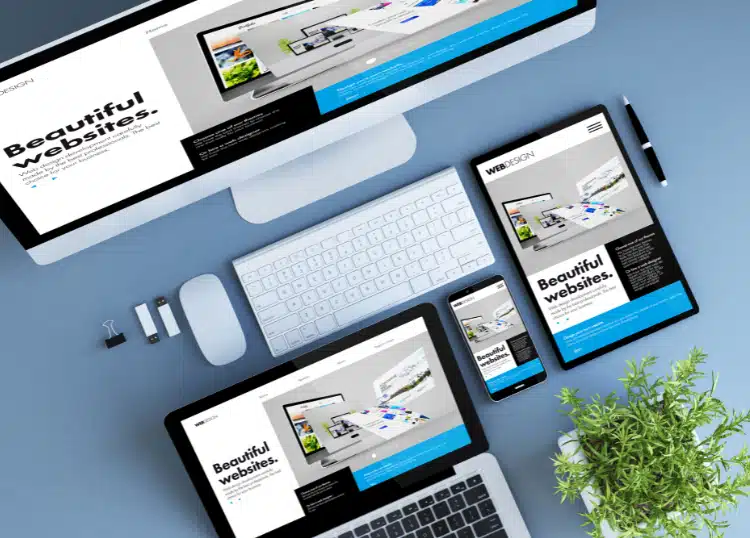
The majority of online traffic now comes from mobile devices. If a website is not designed to adapt seamlessly to different screen sizes, potential customers will leave. Responsive design guarantees that the site looks professional and functions correctly across mobile, tablet, and desktop, keeping users engaged wherever they are.
Performance That Keeps Users Engaged
Good design is not only about visuals but also about functionality. Pages that load slowly, forms that are difficult to complete, or links that do not work quickly frustrate visitors. Smart design prioritises fast loading, simple forms, and smooth interactions. The easier it is to use a website, the higher the likelihood that visitors will convert into customers.
Design as a Conversion Tool
The success of a website is not measured only by the number of visitors but by how many of them take meaningful action. A site that combines strong visual appeal with strategic flow, trust-building elements, and reliable performance becomes a powerful tool for conversion.
A well-designed website is not just a digital brochure. It is an active business asset that works around the clock to attract, engage, and convert potential customers into long-term clients.
To read more relevant articles visit our homepage or visit Marketing Manager.